
The Source Canada Newsletter, Monday August 31, 2026
Lake Ontario is now Lake America in the U.S. government geographic names database. That change is now on Google Maps. According to US-based Google, their hands were tied. Canadian websites need to set their region to Canada for Lake Ontario to reappear.
As of today, Canadians are seeing Lake America in their everyday lives from GO Transit and Hydro One to the LCBO.
Benjamin Bergen, CEO of CVCA, calls it a distraction: “That’s noise, Canada. Noise. Noise gets attention. Canadians need to find the signal.”He has a point. We have bigger, more immediate priorities like attracting foreign direct investment in Canada.
But distracting or not, this name change will not end up being just a humorous anecdote in the otherwise serious matter of negotiating a trade deal with the Americans.
Names are memory and identity. They are deeply personal for Indigenous people. Lake Ontario comes from the Wendat word Ontari:io. They are also personal for anyone who grew up near Lake Ontario, vacationed there in the summer or built a business near its shores.
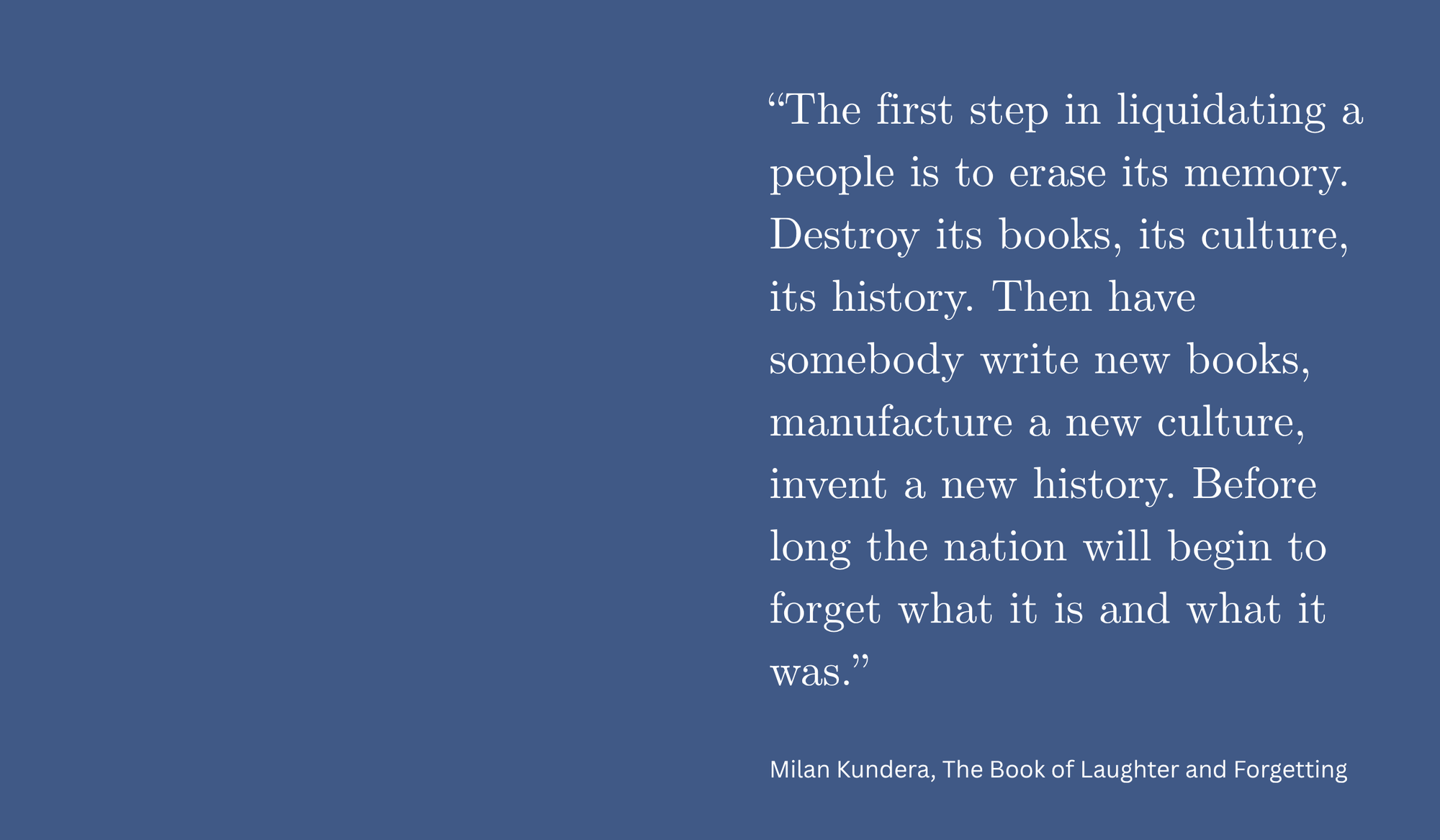
Tariffs will have a devastating impact on many people and industries in Canada. Changing the name of Lake Ontario is an attempt to manufacture a new culture by erasing ours.
One consequence of this episode is highlighting how dependent Canadians are on American tech platforms, most of which are hidden in the fabric of our lives. I wrote about this in The Era of Geopolitical Feature Flagging is Here, when Anthropic disabled its Fable model due to a directive to restrict access to “non-Americans.”
There has been a lot of debate about the definition of ‘sovereignty’ as it applies to the technologies we rely on. A good starting point is control. Who controls what we have access to, which features are enabled and what is the “official version” of the truth?
It’s neither possible nor desirable to have Canadian equivalents to every American tech platform. But we cannot outsource control to the good graces of foreign tech platforms.
Defining sovereignty is deciding what is important to us to have control over. This is the focus of Source Canada’s Sovereign Technology track.
Highlights
Toronto put a Canadian company's AI in front of its building permit queue. BetaKit, Aug 28. The City launched an AI pre-check built on CivCheck, software from Vancouver-based Clariti, flagging missing documents and zoning or building code problems before an application is submitted.
MDA Space set up a venture arm to write direct cheques into Canadian SMBs. SpaceQ, Aug 28. MDA Space LaunchPad Ventures turns the 2018 collaboration program into direct investment in Canadian small and medium businesses building space and defence technology, across 25 focus areas the company has not disclosed.
Xanadu got $195M from Ottawa to build a quantum factory in a former soup plant. The Logic and BetaKit, Aug 28. The repayable Strategic Response Fund contribution is half the $390M Xanadu sought from Ottawa and Ontario combined, funding a 158,000 square foot photonics hub in Etobicoke with 275 jobs against $893M in company spend. It is the largest Canadian quantum manufacturing commitment to date.
Defence
A Canadian battery maker took a direct order from the Republic of Korea Army. True North Strategic Review, Aug 28. NEO Battery Materials received its first direct purchase order for military-grade drone battery packs with no manufacturer or integrator in between, alongside a battery management system order from Assetta under a Korean government procurement program and cell orders from US, Korean and Japanese drone makers. CEO Spencer Huh said customers keep citing "the access to a robust supply source situated outside of adversarial jurisdictions."
NordSpace got $10M to build Canada's first commercial orbital launch site. True North Strategic Review, Aug 27. Ottawa put in $1M and Newfoundland and Labrador $4M against NordSpace's own $5M for the Atlantic Spaceport Complex at St. Lawrence, which will fly the Tundra rocket on the Hadfield-150 engine. The province and the company both frame it as sovereign access to space, with 30 jobs forecast by 2028.
Tool and die shops squeezed by tariffs are trying to get into defence supply chains. The Globe and Mail, Aug 31. With automotive, steel and aluminum work stalled, members of the Canadian Tooling and Machining Association are chasing federal defence spending, and Defence Minister David McGuinty brought GDLS, Boeing, Bombardier, CAE and GM Defense into a room with tool, die and mould executives at an Oldcastle, Ontario breakfast to make introductions.
Policy
Ottawa is spending $504M to move 64 foreign researchers to Canadian universities. BetaKit, Aug 27. The first round of the $1.7B Global Impact+ Research Talent Initiative brings 64 academics working in health, environment and AI to UBC, Ottawa, Toronto and other institutions over eight years, 48 of them from US universities including Harvard, MIT, Yale and Cornell.
Canadian executives say sovereign AI matters and cannot say what it is. BetaKit, Aug 25. An IDC survey commissioned by Cohere of 508 enterprise decision-makers found only 10 percent of Canadian respondents reported high awareness of sovereign AI and 13 percent said it was widely understood inside their organization, even though over half call it a priority.
A founder's argument: stop giving sovereignty away. BetaKit, Aug 27. Caseway CEO Alistair Vigier writes that data sovereignty has become a real procurement requirement and that Canadian startups are answering it with marketing instead of product, recommending sovereignty spec sheets, registration in government procurement systems, and premium pricing for compliant deployments.
Attend Source Canada 2026. Tickets now available.
Subscribe to Source Canada for weekly coverage of Canadian procurement, defence and sovereign technology.